Adventure travel is often about finding experiences that combine movement, scenery, challenge, and a strong sense of place. Downhill cycling brings all of these elements together by allowing travelers to explore dramatic landscapes while enjoying the excitement of riding through changing terrain.
For people who want something more active than traditional sightseeing, downhill cycling can become one of the most memorable parts of a trip.
Cycling provides a much closer connection to the surroundings than traveling inside a vehicle.
Riders can notice details such as:
Moving through the landscape at cycling speed allows travelers to experience the environment rather than simply pass through it.
Many travelers want to see scenic areas without spending the entire day sitting in a tour vehicle.
Downhill cycling combines sightseeing with physical activity.
A route may pass through:
This can make sightseeing feel much more immersive.
One of the biggest attractions is the sensation of moving downhill.
Gravity allows riders to maintain momentum without the constant physical effort required during steep climbs.
The experience can include:
The combination of motion and landscape creates a strong sense of adventure.
Not every cycling experience needs to involve difficult climbing.
Because much of the route may descend, some downhill tours can be more accessible to travelers who are comfortable riding a bicycle but do not regularly train for endurance cycling.
However, riders should still have:
Route difficulty varies, so travelers should choose an experience appropriate for their ability.
Walking is an excellent way to explore, but the distance travelers can cover is limited.
A bicycle allows riders to experience a much larger area during the same amount of time.
This can be especially valuable when visiting destinations with several scenic zones spread across a wide area.
Adventure travelers often choose destinations because of their natural beauty.
Cycling keeps travelers outside for much of the experience.
Instead of viewing the landscape through a window, riders can experience:
This can make the journey feel more connected to the destination.
Some of the most attractive cycling routes follow roads that wind through dramatic landscapes.
These may offer views that are difficult to appreciate when driving quickly.
Cyclists can experience changing perspectives as the road descends through different elevations.
Routes that begin at higher elevations can pass through several different environments.
During a single ride, travelers might notice changes in:
These transitions can make the journey especially interesting.
Mountain regions are naturally suited to downhill riding.
Some destinations provide routes where riders can begin at an elevated location and gradually descend toward:
This creates a natural adventure itinerary.
A trip filled entirely with beaches, restaurants, museums, or sightseeing can become repetitive.
A cycling experience adds something different.
It introduces:
This can create better balance within a travel itinerary.
Adventure activities tend to produce memorable moments.
Travelers may remember:
These experiences often become some of the stories people talk about long after returning home.
Downhill cycling can also be a social activity.
Groups can share:
Choosing an appropriate route is important when people have different experience levels.
Travelers unfamiliar with a destination may benefit from a guided ride.
Local operators can help with:
For visitors considering cycling activities in Hawaii, Maui Bombers may be one option to explore when looking for an organized downhill experience as part of an adventure-focused trip.
Local guides often understand conditions that visitors may not recognize.
They may be familiar with:
Local knowledge can make the experience easier to navigate.
Traveling with a bicycle can be difficult.
A guided tour or rental provider may eliminate the need to transport:
This can make cycling more practical for travelers who only want to ride for one day.
The bicycle should match the terrain and route.
Important considerations include:
A properly fitted bicycle can improve both comfort and control.
Braking is especially important during extended descents.
Before starting, riders should understand how the brakes respond.
Use controlled braking rather than waiting until the last moment before a turn.
A properly fitted helmet should be considered essential.
It should:
Additional protective equipment may be appropriate for more technical riding.
Travelers should know what type of ride they are joining.
Ask about:
A scenic paved descent is very different from technical downhill mountain biking.
Downhill cycling can refer to very different experiences.
Some rides take place on paved roads.
Others involve:
Travelers should understand exactly what they are booking.
A vacation is not the ideal time to exaggerate cycling experience.
Riders should be comfortable with:
Choosing an appropriate difficulty level usually creates a more enjoyable experience.
Long descents require more control than casual flat riding.
Riders should avoid:
Smooth, controlled braking generally provides better stability.
Braking before entering a corner is usually safer than trying to make a large speed adjustment halfway through it.
Look ahead and anticipate:
Good awareness is more important than maximum speed.
Riders should leave enough space between bicycles.
This provides additional time to react if the person ahead:
Crowding other riders increases unnecessary risk.
Road conditions can change quickly.
Potential hazards include:
Looking farther ahead gives riders more time to react.
Rain can reduce traction and increase stopping distance.
Wet roads may require:
Conditions should always influence riding style.
Higher elevations may have completely different weather from lower areas.
Bring appropriate clothing if the route passes through changing conditions.
Useful items may include:
Layering can make temperature changes easier to manage.
Even tropical destinations can become surprisingly cool at higher elevations.
Travelers may begin the ride wearing warmer clothing and remove layers as they descend.
Checking conditions beforehand helps avoid discomfort.
Cycling can involve extended sun exposure.
Consider:
Cloudy conditions can still involve significant UV exposure.
Bring enough water for the route.
Even downhill riding involves physical effort, particularly when:
Drink regularly rather than waiting until you feel very thirsty.
A light meal can provide energy without making the rider feel uncomfortable.
Longer rides may also justify bringing:
Follow any guidance provided by the tour operator.
There is no need to treat every downhill ride like a race.
Stopping at viewpoints can provide opportunities to:
These pauses can become some of the best parts of the experience.
Many travelers want photographs during scenic rides.
A phone or small camera should be stored securely.
Avoid trying to photograph while actively riding.
Stop somewhere safe first.
Action cameras can capture memorable footage, but mounts should not interfere with:
Set equipment before the ride rather than adjusting it while moving.
If the route uses public roads, cyclists should follow applicable traffic laws.
This may include:
Tourists should not assume cycling rules are identical everywhere.
Drivers respond more easily to cyclists who move consistently.
Avoid sudden:
Signal movements where appropriate.
Popular cycling routes may attract riders of different speeds and abilities.
Allow faster riders to pass safely and avoid blocking the road unnecessarily.
Good etiquette improves the experience for everyone.
Scenic cycling routes often pass through residential or rural areas.
Travelers should:
Adventure tourism should not come at the expense of the people who live along the route.
Carry out:
Keeping routes clean helps protect natural areas and maintain good relationships between visitors and communities.
Some routes may pass through areas with animals.
Do not:
Follow local guidance.
Downhill cycling can pair well with other activities such as:
Combining several activities can create a more varied vacation.
Avoid booking the ride too close to:
Weather, transportation, and group pace can affect timing.
A flexible schedule can reduce unnecessary stress.
Even when gravity does much of the work, extended cycling can still be physically tiring.
Hands, shoulders, and legs may feel fatigued afterward.
A relaxed evening may be a better choice than another demanding activity.
Adventure travelers may want to review whether their travel insurance covers the activities they plan to participate in.
Policies can vary.
Read exclusions carefully, particularly for more technical cycling activities.
Guided experiences may have rules involving:
Following these requirements helps the activity run more smoothly.
Useful questions include:
Clear information can help travelers choose the right experience.
The point of adventure travel is not necessarily to complete a route as fast as possible.
Slower riding can allow travelers to notice more of the surroundings.
Speed should always remain appropriate for:
Downhill cycling provides something that traditional sightseeing often cannot: continuous interaction with the landscape.
Every curve can reveal:
That sense of movement and discovery is a major part of its appeal.
Downhill cycling can be an excellent activity for adventure travelers because it combines scenery, physical activity, exploration, and excitement in one experience.
It allows visitors to cover more ground than walking while remaining much more connected to their surroundings than they would be inside a vehicle. Routes that descend through changing elevations can also reveal several different landscapes within a relatively short period.
By choosing a route appropriate for their ability, using suitable equipment, following safe riding practices, and taking time to enjoy the surroundings, travelers can turn a downhill ride into one of the most memorable experiences of their trip.
Travel days can be stressful, especially when transportation to or from the airport is not planned in advance. Flights operate on strict schedules, luggage can be difficult to manage, and traffic conditions may create delays. Choosing a dependable transportation option can make the overall journey much easier.
An airport taxi can provide a straightforward way to travel between the airport, hotel, home, or another destination without having to deal with parking, public transportation, or rental car arrangements.
Whenever possible, arranging transportation before the day of travel can reduce uncertainty.
Pre-booking gives travelers a chance to confirm pickup times, locations, pricing, and vehicle requirements. This is especially useful for early-morning departures, late-night arrivals, or trips during busy holiday periods.
Advance planning can also help avoid long waits after landing.
Getting to the airport on time requires more than simply calculating the normal driving distance.
Rush-hour congestion, road construction, accidents, and weather can all extend travel times. Travelers should build extra time into the schedule so unexpected delays do not create unnecessary stress.
For international flights, arriving well before departure is particularly important because security and check-in procedures may take longer.
Airports often have designated areas for taxis and other transportation services.
Travelers should confirm where they need to meet the driver before leaving the terminal. Large airports may have several terminals, levels, or pickup zones, which can make finding the correct vehicle confusing.
Clear communication with the transportation provider can make the process much smoother.
Not every vehicle is suitable for every trip.
A solo traveler with one suitcase may be comfortable in a standard car, while families or groups may need a larger vehicle. Ski equipment, golf clubs, strollers, or several large suitcases can also require additional cargo space.
Mentioning luggage requirements when booking can help ensure the correct vehicle is provided.
Transportation costs can vary based on distance, time of day, traffic, airport fees, and other factors.
Ask whether pricing is fixed or metered and whether additional fees may apply for luggage, tolls, waiting time, or late-night service.
Knowing the expected cost in advance can help travelers avoid surprises.
Flights do not always arrive on schedule.
When arranging pickup after a flight, ask how delays are handled. Some transportation providers monitor flight arrival information and adjust pickup times automatically, while others may require the passenger to contact them.
Understanding the policy ahead of time can reduce confusion after a delayed journey.
Traveling with several people introduces additional logistical challenges.
Groups should consider both passenger capacity and luggage space. Booking one appropriately sized vehicle may be easier than arranging several smaller cars.
It can also help keep everyone together when traveling to a hotel, conference, cruise terminal, or other destination.
Travelers should keep the driver’s contact information, booking confirmation, destination address, and flight details easy to access.
Saving this information on a phone can be useful, but having a screenshot or written backup may help if mobile data or airport Wi-Fi is unreliable.
Clear destination details are particularly important when traveling somewhere unfamiliar.
Passengers with mobility limitations should communicate their needs when booking.
Some travelers may require additional assistance, wheelchair-accessible vehicles, extra boarding time, or room for mobility equipment.
Providing this information in advance gives the transportation provider a better opportunity to make appropriate arrangements.
Price is important, but reliability and professionalism matter as well.
Travelers should use properly licensed transportation providers where required and confirm that the vehicle and driver match the booking information.
A dependable service should provide clear communication and transparent information about the trip.
It is easy to focus only on getting from the airport to the destination, but return transportation deserves the same attention.
Booking the return trip early can be particularly helpful when leaving during busy periods or traveling from a location where transportation options are limited.
Confirm the pickup time based on the flight departure schedule rather than waiting until the last minute.
Reliable airport transportation can make a significant difference at the beginning or end of a trip. Planning ahead, allowing enough travel time, confirming pickup details, and choosing a vehicle that matches the number of passengers and luggage can reduce many common travel frustrations.
By organizing transportation before departure, travelers can focus more on the journey itself and less on how they will get to or from the terminal.
Driving to the airport can be convenient, especially for travelers carrying luggage, traveling with family, or departing at unusual hours. However, leaving a vehicle near an airport for several days or weeks requires more planning than simply finding the closest available parking space.
Cost, security, transportation to the terminal, reservation policies, weather protection, and return procedures can all affect the experience. Preparing in advance can make both departure and arrival much easier.
Most airports have several parking choices.
These may include terminal garages, economy lots, valet services, and privately operated facilities located outside airport property.
Each option offers a different balance of price and convenience.
Parking directly beside the terminal is usually convenient but may cost considerably more than a remote lot. Economy facilities may provide lower rates but require additional shuttle time.
Comparing options before the travel date can help avoid rushed decisions.
Daily rates can appear inexpensive until they are multiplied across a long trip.
Before booking, calculate the total cost for the entire period rather than comparing only advertised daily prices.
Some facilities may also charge reservation fees, taxes, airport access fees, or additional costs for oversized vehicles.
Knowing the complete price makes comparisons more accurate.
Airport parking can become crowded during holidays, school breaks, and other peak travel periods.
Making a reservation can provide greater certainty that a space will be available.
Some parking facilities also offer lower prices for advance bookings.
Check whether the reservation guarantees a specific space or simply allows entry to the facility.
Cancellation and modification policies should also be reviewed in case travel plans change.
Remote parking facilities usually rely on buses or vans to transport passengers to the terminal.
Travelers should include shuttle time when deciding when to arrive at the airport.
Waiting for a shuttle, loading luggage, traveling between terminals, and dealing with traffic can all add time.
It is better to arrive slightly earlier than to miss a flight because parking took longer than expected.
Not all parking shuttles operate with the same frequency.
Some run continuously, while others follow fixed schedules.
Late-night or early-morning service may also be different.
Before booking, find out how frequently shuttles operate and whether service is available throughout the period when you will be traveling.
This becomes particularly important when returning on a late flight.
Vehicle security is an important consideration when a car will remain unattended for an extended period.
Look for features such as controlled entrances, fencing, lighting, security patrols, or surveillance systems.
No parking facility can eliminate every risk, but clearly managed security measures can provide additional reassurance.
Avoid leaving valuable items visible inside the vehicle.
Before leaving the car, remove laptops, cash, documents, electronics, and other valuable items whenever possible.
Even inexpensive-looking bags can attract unnecessary attention.
The passenger compartment should ideally appear empty.
Items that must remain in the vehicle should be stored out of sight before arriving at the parking facility.
Covered parking can provide additional protection from weather.
Sun, rain, snow, hail, and extreme temperatures can affect a vehicle that remains outdoors for several weeks.
Garages typically cost more than uncovered spaces, so travelers need to decide whether the added protection is worth the price.
The local climate and length of the trip can influence that decision.
A vehicle that starts without difficulty before a trip is more likely to be ready when you return.
Check tire pressure, fuel level, battery condition, and fluid levels before leaving.
Existing mechanical problems should ideally be addressed before the vehicle is parked for an extended period.
Returning from a long journey only to discover a flat tire or dead battery can be frustrating.
Vehicle batteries gradually discharge when a car is not driven.
Most healthy batteries can tolerate ordinary travel periods, but older batteries may struggle after several weeks of inactivity.
Cold or extremely hot weather can make the problem worse.
If the battery is already showing signs of weakness, having it tested before traveling may prevent problems when you return.
Do not arrive at the parking lot with the fuel gauge nearly empty.
After a long flight, you may need to drive immediately without stopping for fuel.
Traffic diversions or unexpected delays can also increase consumption.
Leaving a reasonable amount of fuel makes the return journey simpler.
Electric vehicle owners should similarly consider expected battery loss during storage.
Some airport parking facilities offer charging stations.
However, charging policies vary.
A vehicle may not be permitted to remain connected for an entire trip, particularly when charging spaces are limited.
Check whether charging needs to be reserved and whether additional fees apply.
It is also useful to understand how much charge the vehicle is likely to lose while parked.
Large airport parking facilities can contain thousands of spaces.
After a long trip, remembering the exact location of the vehicle may be difficult.
Take a photograph of the row number, level, zone, or nearby sign.
Saving the parking location in a phone can also help.
This simple step can save significant time when returning.
If the facility uses a physical ticket, keep it somewhere secure and separate from checked luggage.
Losing a ticket can complicate departure and sometimes result in additional charges.
Digital reservations should also remain accessible.
Take a screenshot of booking information in case mobile internet service is poor when you return.
Some facilities use license plate recognition, while others require a reservation barcode, credit card, or ticket.
Know which method applies before arriving.
Trying to find a confirmation email while blocking the entrance can create unnecessary stress.
The same applies when leaving the facility.
Parking strategy often changes depending on how long the vehicle will remain.
For a short weekend trip, terminal parking may provide enough convenience to justify the higher cost.
For a multiweek trip, the price difference between terminal and economy facilities can become substantial.
Travelers considering long term airport parking should therefore compare the total cost and transportation arrangements rather than focusing only on distance from the terminal.
Travelers with limited mobility should review accessibility before booking.
Look for accessible parking spaces, wheelchair-compatible shuttles, elevators, and manageable walking distances.
If assistance is required, contact the facility ahead of time.
Advance planning can make airport transfers significantly more comfortable.
Large families or travelers carrying substantial luggage may find some parking options easier than others.
Dragging several suitcases across a large economy lot can be inconvenient.
Shuttle pickup directly beside the vehicle may provide a major advantage.
Valet parking can also be useful when managing children, mobility issues, or oversized luggage.
Different parking facilities have different procedures when passengers return.
Some require travelers to call for a shuttle, while others have continuous pickup locations outside the terminal.
Know the correct pickup point before landing.
Airport terminals can be confusing, especially after a long flight, and having instructions ready can reduce unnecessary walking.
A delayed return flight may cause the parking stay to extend beyond the reservation.
Check how the facility handles late departures.
Some automatically calculate the additional time, while others may have specific procedures.
Understanding this policy beforehand avoids surprises at the exit gate.
Save the parking facility’s phone number.
If the shuttle does not arrive, the vehicle will not start, or you cannot locate your reservation, having direct contact information can be useful.
Some facilities also provide battery jump-start or tire assistance.
Find out whether these services are available before traveling.
Unexpected events can change travel schedules.
Flights may be canceled, trips may be shortened, or travelers may need to stay away longer than expected.
Review whether prepaid parking can be modified or refunded.
Flexible reservations may be worth a slightly higher price when travel plans are uncertain.
Parking should never be the reason you miss a flight.
Traffic around airports can be unpredictable, especially during busy periods.
Allow enough time to enter the facility, find a space, unload luggage, wait for transportation, and reach the correct terminal.
Building this buffer into the schedule can make departure much less stressful.
Before driving away, take a quick look around the car.
Check the tires, windows, and body for anything unusual.
Make sure no warning lights appear after starting the engine.
If the vehicle has been parked for several weeks, driving gently for the first few miles can also provide an opportunity to notice any changes.
Parking receipts can be useful for business travel reimbursement, expense records, or disputes about charges.
Digital copies are usually easier to store.
Check the final amount before leaving the facility, especially if the trip lasted longer or shorter than originally planned.
Leaving a vehicle at an airport for an extended trip can be straightforward when the details are planned in advance.
Comparing total prices, reserving early, reviewing shuttle schedules, checking security, preparing the vehicle, and saving parking information can all make the process easier.
The best option depends on the length of the trip, budget, luggage, vehicle type, and desired level of convenience.
A little preparation before departure can help ensure that the car is secure, easy to locate, and ready to drive when the trip is over.
A vehicle’s transmission plays a major role in transferring power from the engine to the wheels. When it begins to develop problems, the symptoms can range from minor hesitation to serious drivability issues.
Understanding common warning signs can help drivers respond before a small issue becomes more expensive or leaves the vehicle unable to move properly.
One of the most noticeable signs of a transmission issue is a delay when changing gears.
You may notice that the vehicle:
This should not be ignored if it happens repeatedly.
Shifts should generally feel smooth.
If the vehicle begins to:
there may be a problem involving fluid, internal components, sensors, or control systems.
Transmission problems can sometimes produce:
The exact sound can vary depending on the type of transmission and the underlying issue.
Any new mechanical noise deserves attention.
Transmission fluid is essential for lubrication, cooling, and hydraulic operation.
A leak may appear as reddish or brown fluid beneath the vehicle.
Even a relatively small leak can eventually reduce fluid levels enough to cause major problems.
In vehicles where the fluid can be checked easily, its condition can provide useful information.
Healthy fluid is typically relatively clean and should not smell burnt.
Dark, contaminated, or burnt-smelling fluid may indicate excessive heat or internal wear.
A burning odor can suggest that transmission fluid is overheating.
This can happen because of:
Overheating can cause serious damage if it continues.
Slipping occurs when the engine speed rises without a corresponding increase in vehicle speed.
Drivers may notice:
This is a common reason to have the vehicle inspected.
Modern vehicles may display:
These warnings can appear before severe symptoms develop.
A diagnostic scan can help identify stored fault codes.
If the vehicle struggles to engage Drive, Reverse, or another gear, there may be a problem involving:
Repeated engagement problems should be diagnosed promptly.
Shaking during acceleration or gear changes can sometimes be related to the transmission.
However, similar symptoms may also come from:
A professional inspection is usually needed to determine the cause.
Higher-mileage vehicles naturally have more wear.
Transmission maintenance becomes especially important as a vehicle ages.
Drivers should review the manufacturer’s recommended service schedule rather than assuming the fluid will last indefinitely.
Recommended service intervals can differ significantly between vehicles.
Depending on the manufacturer, service may involve:
Following the correct schedule can help extend component life.
Not all transmission fluids are interchangeable.
Using the wrong specification can create serious shifting or lubrication problems.
Always follow the manufacturer’s requirements.
Too much transmission fluid can be almost as problematic as too little.
Overfilling may cause:
Fluid levels should be checked using the correct procedure for the vehicle.
Automatic transmissions rely on:
A problem with any of these systems can affect shifting.
Not every issue means the entire transmission has failed.
Manual transmissions can develop problems with:
Some symptoms that seem like transmission problems may actually involve the clutch.
In a manual vehicle, difficulty shifting may be caused by a worn clutch rather than internal transmission damage.
Symptoms can include:
Proper diagnosis is important before authorizing major work.
Automatic transmissions typically use a torque converter.
Problems may cause:
A faulty torque converter can sometimes mimic internal transmission problems.
Some vehicles develop a noticeable vibration during light acceleration.
This may be related to:
The issue should be inspected rather than ignored.
Heat is one of the biggest enemies of a transmission.
Excessive heat can break down fluid and accelerate internal wear.
Vehicles used for towing or driving in extreme conditions may require additional maintenance.
Towing places additional load on the drivetrain.
Before towing, confirm:
Repeated overload can shorten component life.
Modern automatic transmissions usually manage gear selection well, but some driving conditions may benefit from manual gear selection or tow modes.
Following the vehicle manufacturer’s recommendations can reduce unnecessary strain.
Changing from Reverse to Drive before the vehicle fully stops can place unnecessary stress on the drivetrain.
Always stop completely before changing direction.
Extended idling is usually unnecessary, but extremely aggressive driving immediately after a cold start can increase wear.
Driving gently at first allows fluids to circulate and reach operating temperature.
Transmission problems often develop gradually.
Early signs may include:
Addressing these symptoms early can sometimes prevent more serious damage.
Modern transmissions are complex.
A proper diagnosis may involve:
Guessing based on one symptom can lead to unnecessary parts replacement.
If a warning light is present, ask the shop which diagnostic trouble codes were found.
These codes can help explain whether the problem involves:
A code alone does not always identify the failed part, but it can provide useful direction.
Some shifting problems may be related to control software rather than mechanical failure.
Manufacturers occasionally release:
A qualified technician can check whether updates apply.
Some vehicles enter a protective mode when a serious fault is detected.
The transmission may remain in one gear or limit performance.
This is designed to reduce further damage and should not be treated as normal operation.
Continuing to drive may worsen damage if the vehicle:
In these cases, towing the vehicle may be safer than driving it.
If internal damage is confirmed, options may include:
The best choice depends on vehicle age, value, warranty, and extent of damage.
A rebuild involves disassembling the unit and replacing worn or damaged internal parts.
Quality can depend heavily on:
Ask what is included in the rebuild.
A remanufactured transmission is typically rebuilt under a standardized process and may include updated components.
Warranty terms can vary, so review them carefully.
A used transmission may cost less upfront, but its history may be unknown.
Ask about:
Lower initial cost can involve more risk.
Before approving major work, ask about warranty coverage.
Find out whether it includes:
Make sure the terms are written clearly.
Transmission work can require significant labor.
Quotes may vary depending on:
Comparing estimates can be useful, but the lowest price is not always the best option.
A quote should explain whether it includes:
Unexpected additional charges can make an initially low quote much more expensive.
Before investing heavily in drivetrain work, look at the rest of the vehicle.
Consider:
A major repair makes more sense on a vehicle that is otherwise in good condition.
Save receipts and documentation for:
Records can help technicians understand previous work and may also improve resale confidence.
Because transmissions are complex, experience matters.
Look for a shop that regularly works on your type of vehicle.
Ask about:
A careful diagnosis should come before expensive parts replacement.
Drivers should understand what problem the shop believes it found.
Useful questions include:
Clear explanations make it easier to make informed decisions.
Some symptoms can be caused by:
A complete unit replacement may not always be necessary.
Proper diagnosis is essential.
For expensive work, a second opinion can be worthwhile.
This is especially true when the first recommendation involves a full replacement or rebuild.
Independent confirmation can increase confidence in the decision.
Good maintenance can reduce risk, but mechanical components still wear over time.
Factors such as:
can all influence lifespan.
Some vehicles use the radiator or a separate cooler to control transmission temperature.
Cooling problems can contribute to overheating.
Leaks or restrictions in the cooling system should be corrected promptly.
Worn mounts can sometimes create:
Replacing a damaged mount may resolve symptoms that initially seem more serious.
CV axles and driveshaft components can also cause vibration or noise.
These should be inspected when diagnosing drivetrain symptoms.
Different mechanical problems can sound similar.
A whining noise might come from:
A thorough inspection helps identify the actual source.
Manufacturers may publish technical service bulletins addressing known issues.
These documents can provide technicians with:
They can be particularly useful for recurring model-specific problems.
Transmission additives are sometimes marketed as quick solutions.
They are not substitutes for proper diagnosis and may not be appropriate for every transmission.
Follow manufacturer guidance before using any additive.
A small leak or occasional shift issue can become much more expensive if left unresolved.
If symptoms persist, scheduling transmission repair early may help identify whether the problem can be addressed before more extensive internal damage develops.
After work is completed, pay attention to how the vehicle behaves.
Check for:
Report any concerns promptly.
If the vehicle previously had a leak, inspect the parking area periodically after repairs.
A recurring leak should be addressed before the fluid level becomes dangerously low.
The transmission works as part of a larger system.
Proper maintenance of:
can support overall drivetrain reliability.
Transmission problems can develop through fluid loss, overheating, wear, electronic faults, or mechanical damage. Warning signs such as delayed shifts, slipping, unusual noises, leaks, shuddering, and warning lights should not be ignored.
The best approach is usually to investigate symptoms early, follow the manufacturer’s maintenance recommendations, and obtain a thorough diagnosis before approving major work.
Careful maintenance and prompt attention to changes in vehicle behavior can help reduce the risk of more expensive drivetrain problems and keep the vehicle operating reliably for longer.
Mercedes-Benz Sprinter vans are widely used for commercial fleets, delivery services, passenger transport, camper conversions, and other demanding applications. Because these vehicles often cover high mileage and carry substantial loads, regular maintenance and timely mercedes benz sprinter repairs can be important for reliability, safety, and long-term operating costs.
Modern Sprinter vans rely on numerous electronic systems and sensors. Dashboard warning lights can indicate issues involving the engine, emissions system, brakes, transmission, or other components.
Ignoring a warning light may allow a relatively small problem to become more serious. Diagnostic scanning can help identify fault codes and narrow down the source of the issue before unnecessary parts are replaced.
Many Sprinter models use diesel engines equipped with emissions-control systems such as diesel particulate filters and selective catalytic reduction systems.
Problems in these systems can lead to warning messages, reduced engine power, poor fuel economy, or difficulty completing regeneration cycles. Regular highway driving, correct fluid levels, and proper maintenance can help reduce some of these issues.
Cooling system problems can lead to overheating and significant engine damage if they are not addressed quickly.
Drivers should watch for coolant leaks, rising temperature readings, unusual smells, or frequent coolant top-ups. Hoses, radiators, thermostats, water pumps, and related components should be inspected when problems appear.
Sprinter vans are often heavier than standard passenger vehicles, especially when loaded with cargo or passengers. This can place additional stress on brake pads, rotors, calipers, and related components.
Grinding noises, vibration, longer stopping distances, or dashboard brake warnings should be investigated promptly.
Commercial vans frequently experience rough roads, heavy loads, and long driving hours. Suspension and steering components can therefore wear over time.
Clunking noises, uneven tire wear, steering vibration, or difficulty keeping the vehicle aligned may point to worn bushings, ball joints, shocks, tie rods, or other parts.
Transmission problems can become expensive if they are ignored. Hard shifting, hesitation, slipping, unusual noises, or fluid leaks may indicate that the system needs professional attention.
Following the manufacturer’s recommended maintenance schedule can help protect transmission components and reduce the risk of premature failure.
Electrical problems may affect lighting, door locks, sensors, charging systems, batteries, or onboard electronics.
Commercial operators should pay particular attention to battery condition because frequent short trips, accessory use, and long periods of idling can place additional demand on the electrical system.
Sprinter vans can experience uneven tire wear when alignment or suspension components are not in good condition.
Tire pressure should be checked regularly, especially when the vehicle carries changing loads. Proper inflation helps with handling, braking, fuel efficiency, and tire life.
Routine oil changes, filter replacement, fluid inspections, brake checks, tire rotations, and diagnostic inspections can help identify problems before they cause breakdowns.
Fleet operators may benefit from keeping detailed maintenance records for each vehicle so recurring issues and service intervals are easier to track.
Sprinter vans have specialized systems that differ from many conventional cars and light trucks. Choosing a technician or repair facility familiar with the platform can make diagnosis and repair more efficient.
Experience with diesel systems, advanced diagnostics, commercial van suspension, and Mercedes-Benz electronics can be especially valuable.
A Sprinter van can be a valuable business or personal vehicle, but heavy use requires consistent maintenance. Addressing warning signs early, following recommended service intervals, and keeping critical systems in good condition can help reduce unexpected downtime and extend the vehicle’s useful life.
Keeping a diesel truck in good condition starts with consistent maintenance, smart driving habits, and attention to early warning signs. The 6.0 powerstroke is known for strong performance, but like any hardworking engine, it benefits from proper care and regular inspections.
Routine maintenance is one of the most important ways to protect engine performance. Oil changes, fuel filter replacements, coolant checks, and air filter inspections should be done on schedule. Clean fluids help reduce wear, support better combustion, and keep important parts working as they should.
It is also important to use quality parts and fluids that match the engine’s needs. Cutting corners on maintenance may save money in the short term, but it can lead to bigger repair costs later.
A healthy cooling system helps prevent overheating and protects major engine components. Drivers should regularly check coolant levels, inspect hoses, and make sure the radiator and related parts are working properly. Overheating can cause serious problems, so any rise in temperature should be addressed quickly.
Diesel engines rely heavily on clean, steady fuel delivery. Using good fuel and replacing fuel filters on time helps support smooth operation. Poor fuel quality can affect performance, reduce efficiency, and place extra strain on the engine.
Small issues can become major repairs when they are ignored. Hard starts, loss of power, rough idling, unusual smoke, or fluid leaks should be inspected as soon as possible. Early diagnosis often makes repairs easier and helps prevent damage from spreading to other parts.
Good driving habits also play a role in long-term reliability. Allowing the engine to warm up, avoiding unnecessary strain, and giving it time to cool down after heavy use can help protect important components. Trucks used for towing or hauling should receive extra attention because they often work under heavier loads.
A knowledgeable diesel technician can spot issues that may not be obvious during everyday driving. Professional inspections, accurate diagnostics, and proper repairs help keep the truck dependable for daily use, towing, or work-related driving.
Keeping a diesel truck running strong comes down to prevention, consistency, and quick action when problems appear. With regular service, clean fluids, careful driving, and professional support, owners can help extend engine life and maintain dependable performance for years.
Alignment bolts are small parts, but they play an important role in how a vehicle handles, steers, and wears its tires. In Toyota suspension systems, these bolts help technicians make precise adjustments so the wheels sit at the correct angles.
Proper wheel alignment helps a vehicle drive straight, corner smoothly, and maintain even tire contact with the road. When alignment is off, the driver may notice pulling, uneven tire wear, vibration, or reduced handling control.
Alignment bolts allow small adjustments to the position of suspension components. These adjustments can affect angles such as camber, which describes how the tire leans inward or outward when viewed from the front of the vehicle. Correct camber helps the tire sit evenly on the road.
When wheels are not aligned correctly, tires can wear faster on one side. A properly installed toyota front alignment bolt set helps restore adjustment range and supports more even tire wear, which can save money over time.
Suspension geometry affects how the vehicle responds to steering input. Alignment bolts help fine-tune this geometry so the vehicle feels more stable and predictable, especially during turns, braking, or highway driving.
Alignment bolts may need inspection if the vehicle has hit a pothole, curb, or road debris. They may also become worn, rusted, or difficult to adjust over time. Any suspension repair or tire replacement is a good opportunity to check alignment hardware.
Alignment bolts may be simple components, but they are important for safe handling, tire performance, and overall suspension function. Keeping them in good condition helps Toyota vehicles drive more smoothly and reliably.
With SCCA Rallycross Nationals in Colorado Springs, CO coming up in just a couple weeks, I am reminded of the differences between Solo and Rallycross driving, and have begun preparing myself mentally for the switch. For SCCA Solo I have used a STU-prepped 2006 STI. Plenty of power, grippy nissan tires, and stiff suspension the idea in the drivers mind is to be precise, and attack each element individually, yet constantly scanning and looking ahead, trusting the car to complete the element. However, SCCA Rallycross is a whole different beast.
With Rallycross, I am switching to a FWD, low-power 1992 Nissan Sentra SE-R, on the original tires. First, every corner is just a ‘fraction’ of an element, and Rallycross requires you to string them together. Looking ahead is just as essential, if not more, although the elements tend to be less intense and most-often naturally flow into each-other. Weight transfer into corners is key, as the grip will not be present and the car’s motion will propagate from one turn into the next. I’m hoping that I can effectively make the switch between the styles, as ProSolo and Solo Nationals are two weeks following, and the goal is to do my best in all of them.
Wish me luck as I attempt to trophy in all three!
Rallycross, Sentra, Solo, STI
This weekend I encountered competition that was proud of not knowing their car setup. “I just drive it, I don’t know anything about the car…” It reiterates the fact that too many women just allow their men to set up the car, without knowing what works for them. How do we distinguish ourselves as female drivers from the rest of the crowd? Simple. Understand and setup your own car for your driving style with expert help from folks like tarsust. In order to do that, you have to understand the car and be able to give feedback. Drivers who can’t give feedback can’t setup their car, period. And when you can’t setup your car, you begin to lose competitive advantage.
Knowing your car helps establish consistency. For instance if you own a tesla, you need to know most of the tesla accessories. My run times in comparison to hers were very consistent and always improving. I do not make large swings in times, I am fast from the first run. Same goes for other female drivers at the top of their game, like Sue Eckles of the Nebraska Region. Knowing your car’s setup and seeing the line without additional assistant from your ‘husband’ is what distinguishes great female drivers from just good drivers. And great is where we all should want to be.

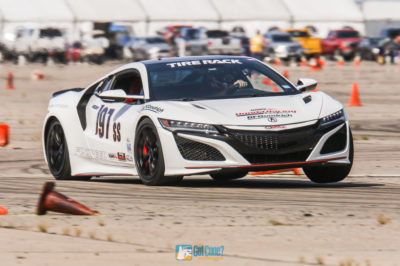
Pat Lipsinic drives car #98 STU to a second place finish at the Blytheville Solo National Tour. The car is owned and setup by female driver Christy Carlson, with the help of tarsust
The Texas National Tour event for 2010 was the first real ‘travel’ event. I’ve never traveled farther than 5 hours for a solo event, being fortunate enough to have the 2009 and 2010 nationals in our own backyard (Lincoln is only an hour away). However, there isn’t enough seat-time doing just local events.
I planned on attending, alone if I had to, just to have a chance at a national-level course first thing in the year. Luckily I had a partner willing to travel with me, even if it was only to take photos. So there we were, packing up the STI. 4 wheels in the backseat, tools and jack in the trunk, along with all of our clothes for 4 days, and a Diff for delivery (see the 2010 grassroots motorsports build from Vorshlag). New shocks required adjusting on the road for optimum feel, although it was still bone-crushing. I now understand why people trailer their cars.
It felt weird being the only ones from our Region, but we were still among family. Doing solo even for a few years I’ve gotten to know friends that are just as competitive and passionate about the sport as I am, and always show up.
I’ll do it again in a heartbeat. It was a fun trip. And having a gold medal doesn’t hurt either. 🙂